 Sankashti Chaturthi Mandal
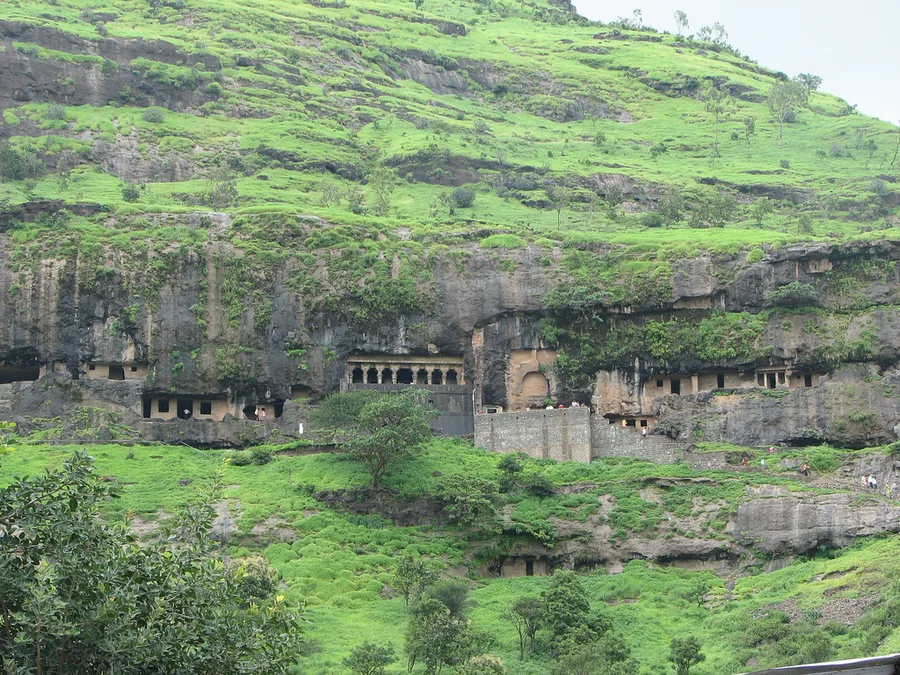 Photo: Niemru from MUMBAI, INDIA / Wikimedia Commons (CC BY 2.0)
High in the Lekhan hills, carved into a cave that has stood since ancient times, sits the temple of Girijatmaj — the only Ashtavinayak shrine set upon a mountain, and the only one where the deity is not a separate murti but is himself part of the living rock. His name says plainly what happened here: Girijatmaj, the son of Girija, another name for Mother Parvati.
Twelve Years of Longing
Mother Parvati desired more than anything to have Shree Ganesh as her own son. To that end, she withdrew to these caves and undertook penance for twelve unbroken years, her devotion never wavering despite the passage of time.
The Boon Fulfilled
Moved by the depth of her penance, Shree Ganesh granted Mother Parvati the boon she sought — that he would be born to her as her child. On Bhadrapada Shudh Chaturthi, she gathered the turmeric and sandalwood paste from her own body, mixed it with oil, and shaped it into the figure of a child. From this act of devotion, Shree Ganesh took form as her son.
A Deity Carved in Stone
Unlike every other Ashtavinayak temple, the murti at Lenyadri is not a separate idol placed within the shrine — it is carved directly into the stone wall of the very cave where Mother Parvati's penance took place. Set among a larger complex of ancient Buddhist cave temples and reached by climbing more than three hundred steps, the site carries a stillness that reflects the years of quiet devotion that once filled it.
The Mountain Shrine
Devotees who complete the climb to Girijatmaj often describe it as the most contemplative stop on the Ashtavinayak pilgrimage — a place where the story of a mother's longing and a son's arrival can still be felt in the rock itself.