 Sankashti Chaturthi Mandal
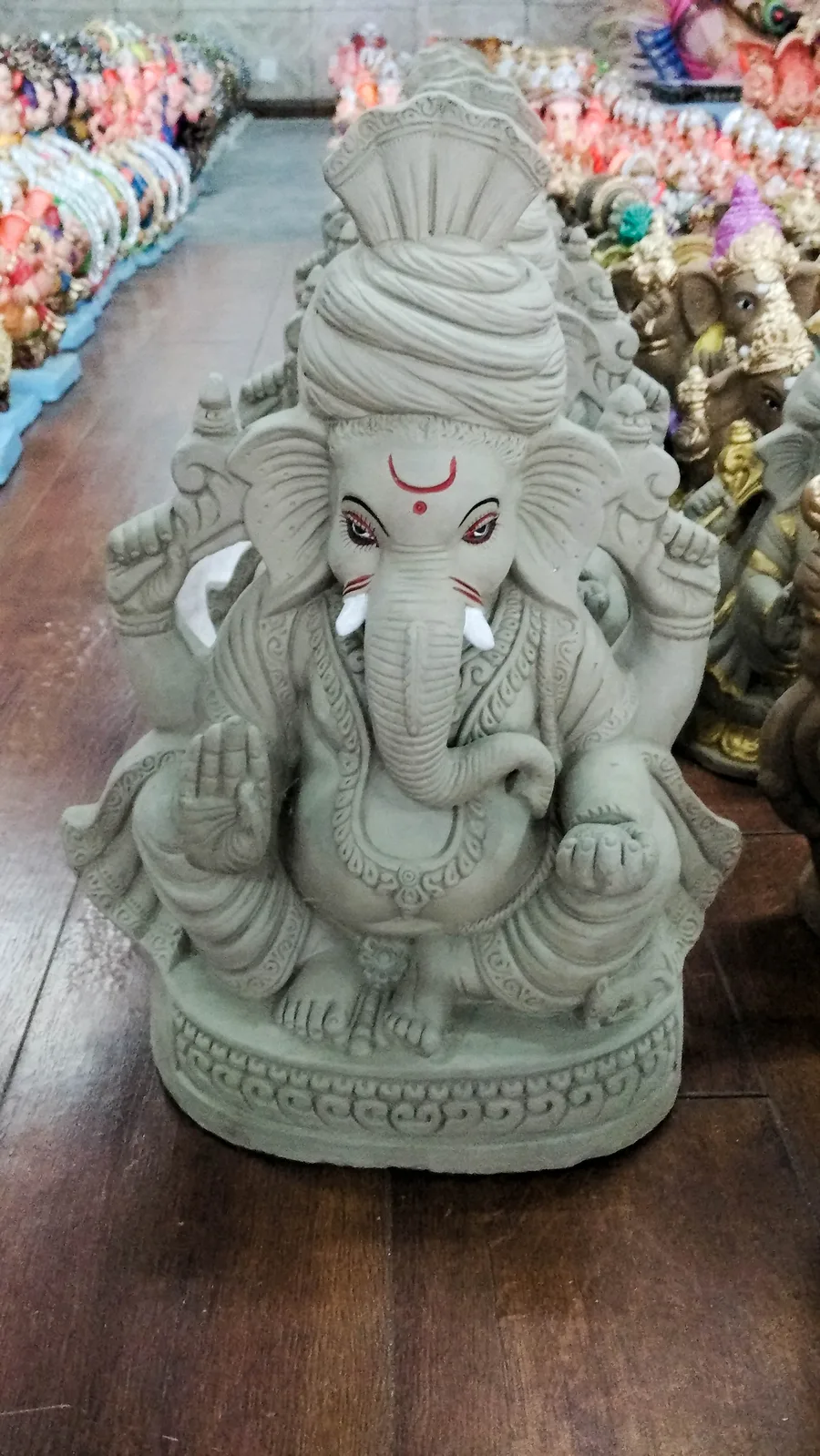 Photo: VedSutra / Wikimedia Commons (CC BY-SA 4.0)
Each year, the idol of Shree Ganesh welcomed into homes and public pandals for Ganesh Chaturthi is traditionally shaped from clay — a material choice carrying meaning that extends well beyond simple craftsmanship.
Formed From the Earth
Clay, drawn from the earth itself, is molded by artisans into the familiar form of Shree Ganesh, painted, adorned, and welcomed with full ceremony into the household or community for the days of the festival, treated during that time as the living presence of the deity himself.
Returned to the Water
At the festival's close, the idol is carried in procession to a river, lake, or sea and immersed — visarjan — allowing the clay to dissolve back into the elements from which it was formed. This act mirrors the larger cycle understood throughout devotional teaching: that form arises from the formless and, in time, returns to it, without diminishing what was real and sacred in the form while it lasted.
What Devotees Seek
Devotees participating in visarjan are invited to hold both joy and letting go together — celebrating Shree Ganesh's presence fully during the festival, and releasing the physical form with the same devotion with which it was welcomed.