 Sankashti Chaturthi Mandal
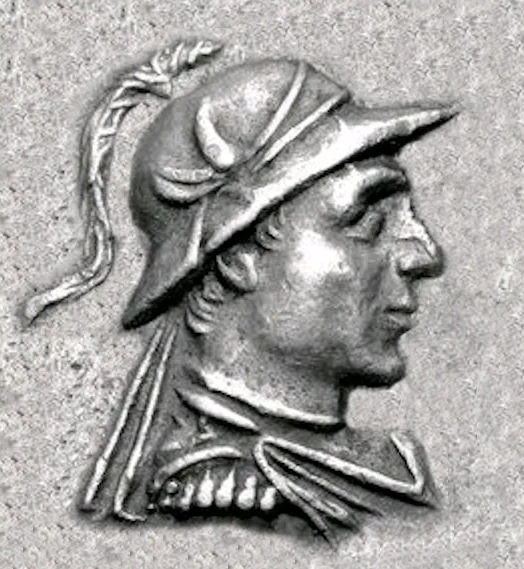 Photo: CNG coins. . Used with permission (CNG coin [1]). / Wikimedia Commons (CC BY-SA 3.0)
A striking silver coin issued by Hermaeus, the last major Indo-Greek king, ruling in the region near present-day Kabul in the first century BCE, may hold what some scholars consider the earliest surviving depiction of a figure resembling Ganesha.
A Debated Discovery
The coin's reverse shows a seated, enthroned figure whose head some numismatists have interpreted as elephant-formed rather than the expected image of the Greek god Zeus, suggesting a deliberate blending of Greek and local Indian religious imagery on the coinage of a king ruling a genuinely mixed cultural region.
Priority and Ongoing Study
Scholarly attention to this coin dates back to at least 1955, and its interpretation remains actively discussed among numismatists and historians of religious art, with descriptions of it as "possibly the oldest-ever depiction" of the deity reflecting appropriate scholarly caution rather than settled certainty.
What This Coin Reveals
Whether or not this particular coin proves to be the very earliest image of Shree Ganesh, it reflects the genuine cultural blending of Hermaeus's kingdom, where Greek political authority and local Indian religious imagery could be brought together on the same small piece of currency.