 Sankashti Chaturthi Mandal
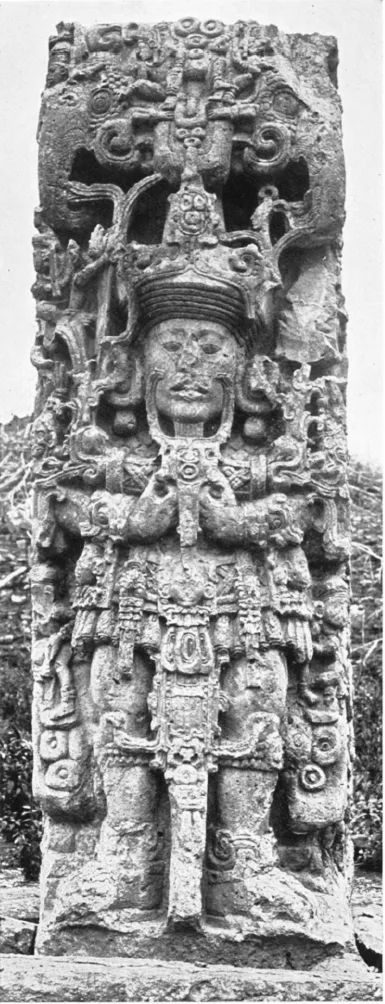 Photo: Grafton Elliot Smith (d. 1937) / Wikimedia Commons (Public domain)
Among the more debated theories in alternative archaeology is the claim that ancient Maya carvings at Copan, Honduras, depict elephants — and by extension, some have speculated, evidence of contact with Indian civilization and imagery resembling Ganesha. This collection addresses the claim honestly rather than repeating it as settled fact.
What the Carvings Actually Show
Stela B at Copan features prominent spiraling forms at its upper corners that a 1924 book by Professor Elliot Smith proposed were elephants, driven by mahouts, suggesting pre-Columbian contact between Asia and the Americas centuries before Columbus.
What Mainstream Scholarship Concludes
Mainstream Maya scholars have firmly identified these same spiraling forms not as elephant trunks but as the curling fangs of a serpent monster common throughout Maya iconography, with alternative interpretations over the years including macaws, tortoises, and even woolly mammoths — the macaw identification remaining the scholarly consensus.
Why This Story Is Included Honestly
This collection includes the Copan theory not to endorse it, but to address it directly: no credible evidence connects these Maya carvings to Ganesha or to actual contact with India, and devotees are better served by an honest account of a debated fringe theory than by a claim presented as established history.