 Sankashti Chaturthi Mandal
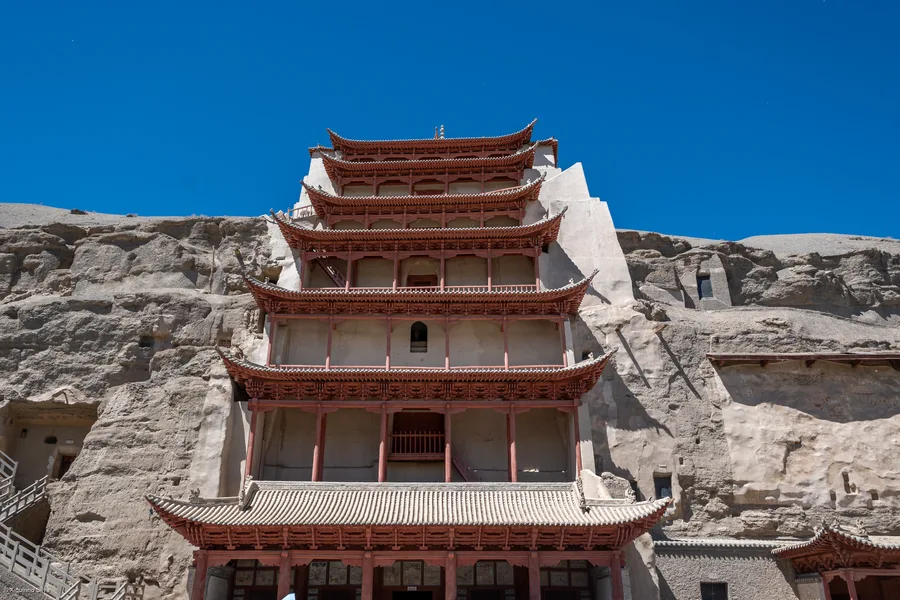 Photo: xiquinhosilva / Wikimedia Commons (CC BY 2.0)
Along the ancient Silk Road in western China, the Mogao Caves at Dunhuang preserve centuries of Buddhist art, and within Cave 285, dated to the Western Wei period of the sixth century, sits one of the earliest confirmed depictions of Vinayaka in Chinese Buddhist art.
A Deity Among Protectors
The elephant-headed figure appears in this cave painting alongside Maheshvara, a form of Shiva, and Skanda, positioned as a protector of the Buddhist teaching itself — evidence of how thoroughly Hindu deities had already been woven into Chinese Buddhist religious art by this early period.
A Waypoint on a Long Journey
Dunhuang sat at a crucial junction of the Silk Road, and this fresco offers a rare, dated glimpse of Shree Ganesh's image already established in Chinese religious art centuries before his worship would travel onward into Japan through Shingon Buddhism.
What This Fresco Reveals
This sixth-century painting stands as tangible proof that his presence in East Asian Buddhism did not arrive suddenly, but developed gradually along trade and pilgrimage routes stretching back well over a thousand years.