 Sankashti Chaturthi Mandal
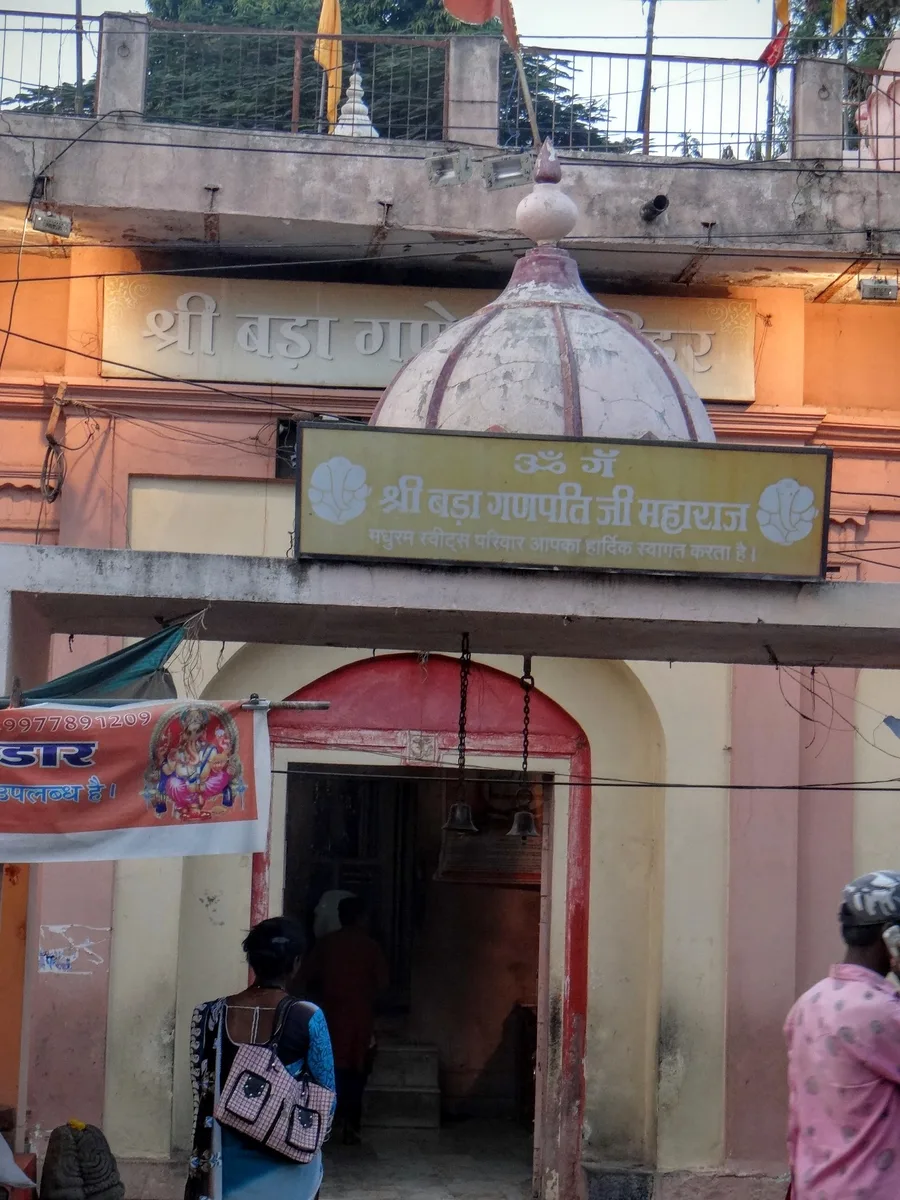 Photo: Ujjain.travel / Wikimedia Commons (CC BY-SA 4.0)
Also in Ujjain stands Bada Ganesha, distinguished not by an ancient story but by the extraordinary composition of the idol itself — a towering form built from sacred soil and water gathered from across India's holiest sites.
An Idol Built From Sacred Geography
Rather than carved from a single stone, this eighteen-foot idol was formed using limestone, jaggery, bricks, and holy soil, mixed with water and earth brought specifically from India's seven great Mokshapuris — Mathura, Dwarka, Ayodhya, Kanchi, Ujjain, Kashi, and Haridwar.
A Nation's Sacred Places Made One
This deliberate gathering of soil and water from across the country's most revered pilgrimage cities transforms Bada Ganesha into something more than a single temple's idol — a physical union of India's scattered sacred geography, brought together in one towering, devotional form.
What Devotees Seek
Pilgrims who may never visit every one of these seven holy cities individually find in Bada Ganesha a single place where devotion to all of them converges, a temple that carries the blessing of the nation's sacred geography within its very substance.