 Sankashti Chaturthi Mandal
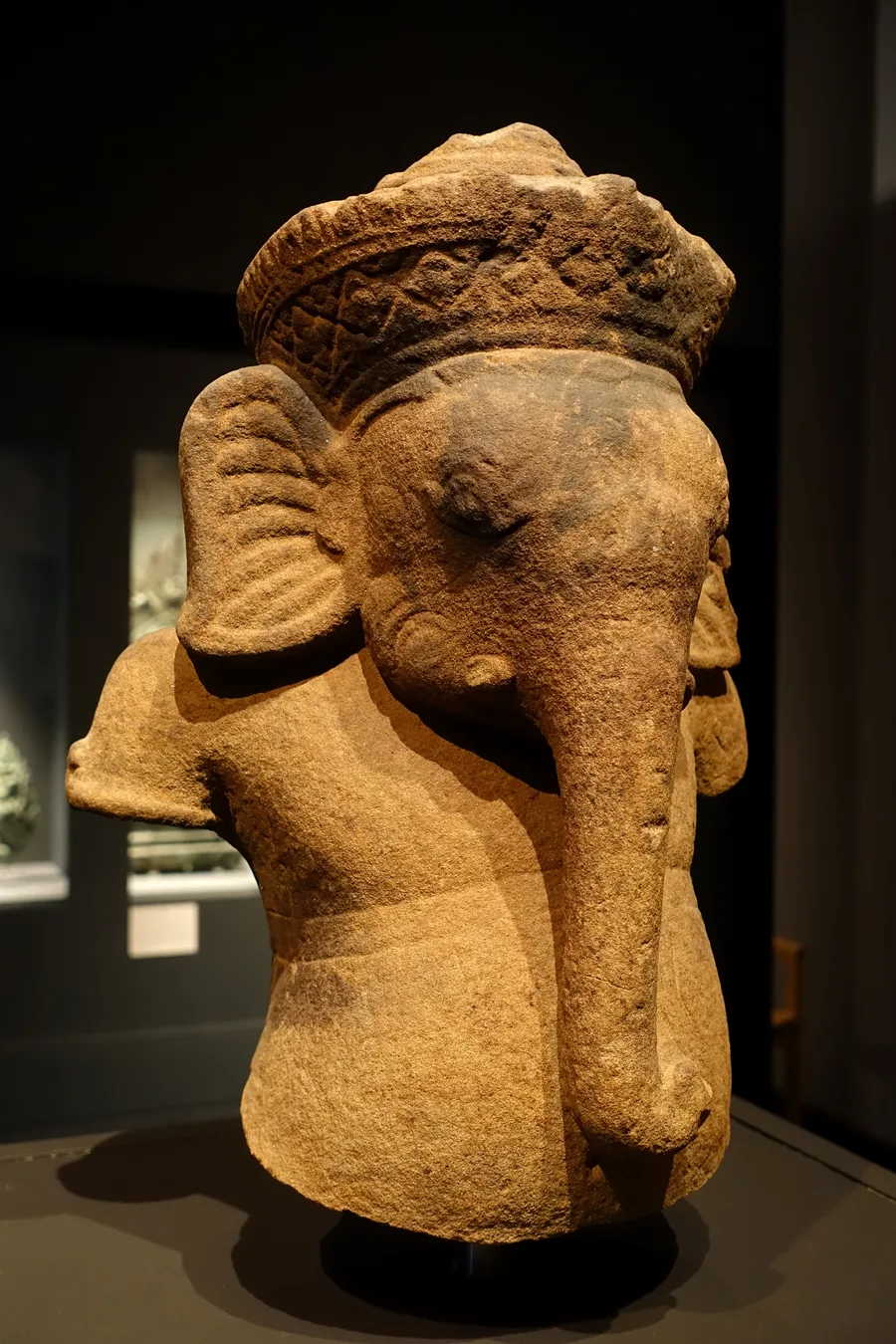 Photo: Unknown authorUnknown author / Wikimedia Commons (Public domain)
This collection's Global Stories have already examined the distinctive Khmer artistic traditions of ancient Cambodia in detail — the ascetic, lean statues of Koh Ker and the third eye linking Ganesha visually to his father Shiva — and this entry returns to that material briefly within the context of sacred textual and artistic tradition more broadly.
Art as Its Own Form of Sacred Text
Khmer sculpture, though not scripture in the conventional sense, functioned as its own form of theological expression, encoding through stone and form the same devotional understanding that written Puranic texts conveyed through narrative and verse.
A Complementary Perspective
Readers seeking the full account of these distinctive artistic choices — their meaning, their history, and the inscriptions of Prasat Bakong establishing Shree Ganesh's precedence in Khmer royal worship — will find them told in full elsewhere in this collection's Global Stories.
What Devotees Seek
Devotees interested in how sacred understanding is carried through art as much as through text find in Khmer sculpture a vivid case study, gathered here as part of this collection's broader survey of sacred traditions and texts beyond India's own borders.