 Sankashti Chaturthi Mandal
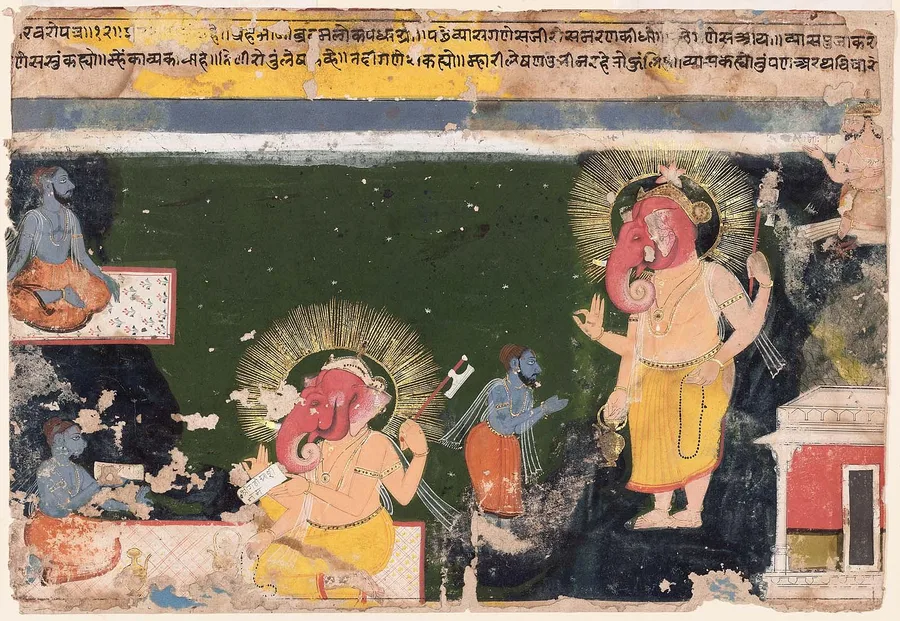 Painting: 17th-c. Mewar manuscript, Museum of Fine Arts, Boston / Wikimedia Commons (Public domain)
At the heart of the Vyasa-Ganesha agreement lay a single, uncompromising condition Shree Ganesh set before agreeing to serve as scribe: that his pen, once begun, must not stop.
A Condition That Raised the Stakes
This was no small request. By insisting that Vyasa recite without pause, Shree Ganesh transformed what might have been a simple act of transcription into a genuine test of endurance and preparation for them both — any hesitation on Vyasa's part risking the collaboration's collapse.
A Mirror Condition in Response
Vyasa, equally exacting, answered with his own requirement: that Shree Ganesh not merely copy his words but fully understand each verse before setting it down, ensuring that speed would never come at the cost of comprehension.
What Devotees Seek
Devotees facing their own demanding, uninterrupted tasks — an exam, a deadline, a difficult project — draw on this condition as an image of total commitment: that some undertakings simply do not allow for half-measures once begun.