 Sankashti Chaturthi Mandal
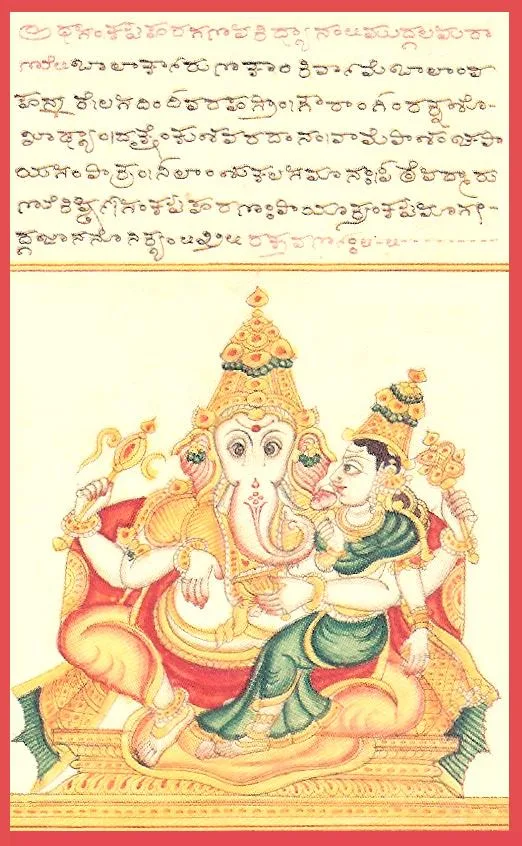 Painting: Folio from the Sritattvanidhi manuscript, Mysore, 19th century / Wikimedia Commons (Public domain)
Sankatahara means "dispeller of sorrows," and this final form among the thirty-two — red-hued, seated upon a red lotus with his Shakti at his side — is turned to by devotees in their deepest hours of suffering, when the light of a new dawn feels most needed.
Appearance
Dressed in blue, Sankatahara Ganapati holds a goad in a gesture of blessing on one side, and a noose along with a vessel of sweetened payasam on the other — nourishment and comfort offered alongside protection.
What the Form Represents
Where the thirty-two forms began with Bala Ganapati's innocent childhood, they close here with Sankatahara Ganapati's promise that no sorrow, however deep, is beyond the reach of Shree Ganesh's compassion. This final form completes the circle: whatever difficulty a devotee has faced along the way, relief and comfort remain within reach.
What Devotees Seek
Those enduring genuine hardship, grief, or prolonged suffering turn to Sankatahara Ganapati above all others, trusting in his particular gift for dispelling sorrow and restoring hope.