 Sankashti Chaturthi Mandal
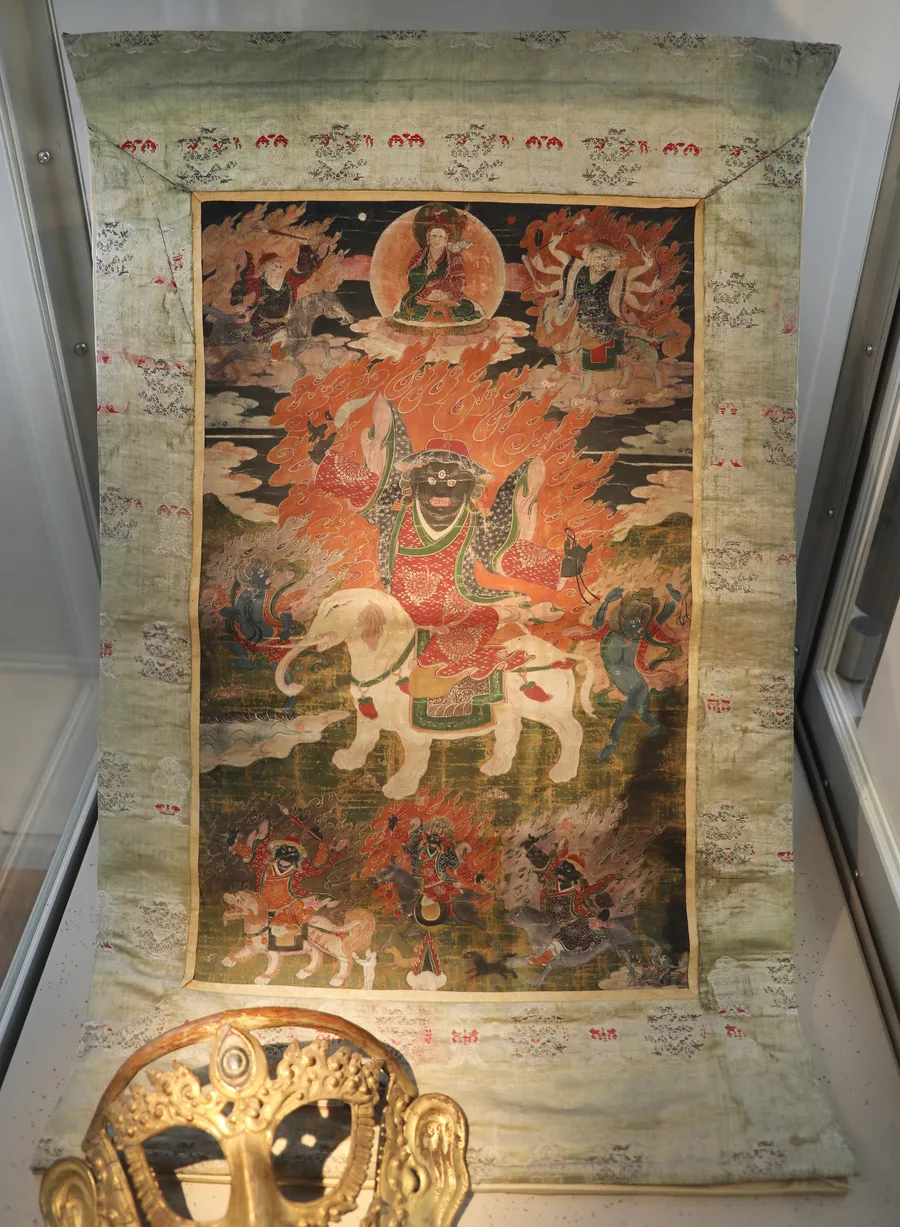 Photo: Francesco Bini / Wikimedia Commons (CC BY-SA 4.0)
Within Tibetan Buddhist iconography, a striking and complex image places a small elephant-headed figure, Vinayaka, beneath the feet of Mahakala, the great protector deity — an image that calls for careful and honest explanation.
Two Roles for One Form
In Indo-Tibetan Buddhism, Vinayaka is honored in his own right as a remover of obstacles and a deity of prosperity, often depicted much as Ganesha is in Indian tradition. Yet in specific depictions of the six-armed Mahakala, a Vinayaka figure appears differently — trampled underfoot, without evident distress, symbolizing obstacles mastered and dispersed by the greater protector.
An Honest Reading
This image reflects the layered, sometimes complex ways Ganesha's form was received as it traveled into new religious contexts along the Buddhist world's own paths, taking on meanings shaped by each tradition's particular symbolism rather than remaining fixed in a single role.
What This Reveals
Rather than diminishing Shree Ganesh's significance, this image illustrates how deeply his identity as remover of obstacles took hold across Asia — so thoroughly that even the personification of obstacles themselves, in one distant tradition, came to bear his form.