 Sankashti Chaturthi Mandal
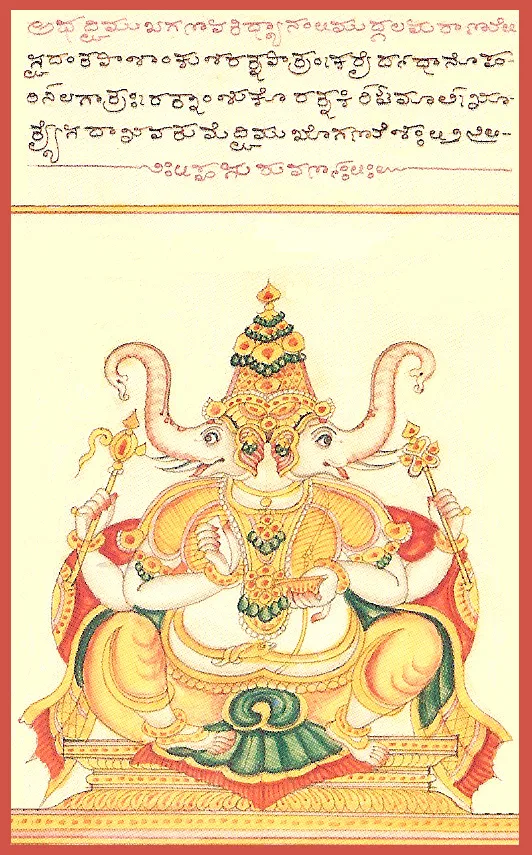 Painting: Folio from the Sritattvanidhi manuscript, Mysore, 19th century / Wikimedia Commons (Public domain)
Dvimukha means "two-faced," and this greenish-blue form of Shree Ganesh looks in two directions at once — a rare and striking image of dual awareness.
Appearance
Dressed in a red robe and a crown set with gems, Dvimukha Ganapati holds his tusk, a noose, a hook, and a pot of gems in his four hands, his two faces turned so that nothing before or behind him goes unseen.
What the Form Represents
The two faces of this form represent the ability to perceive both the physical, outward world and the inner, spiritual realm at the same time — a devotee's aspiration to live fully engaged with daily life while never losing sight of the sacred.
What Devotees Seek
Those seeking to balance worldly responsibility with spiritual practice, rather than choosing one over the other, turn to Dvimukha Ganapati as an example of holding both at once.