 Sankashti Chaturthi Mandal
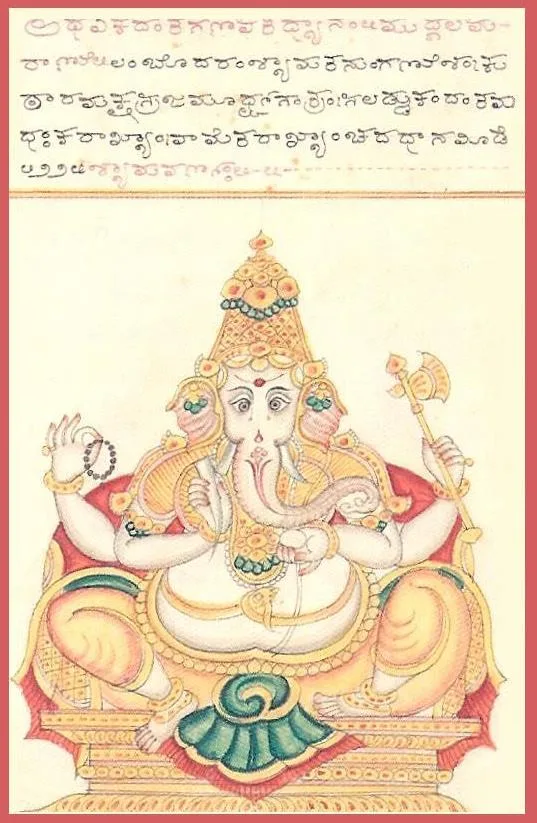 Painting: Folio from the Sritattvanidhi manuscript, Mysore, 19th century / Wikimedia Commons (Public domain)
Within the thirty-two classical forms, Ekadanta Ganapati is the blue-hued figure defined by his single, unbroken tusk. This is worth distinguishing clearly from the broader account of how Shree Ganesh came to have only one tusk — here, Ekadanta refers specifically to this one iconographic form among the thirty-two, not to that wider sacred history.
Appearance
With four arms, Ekadanta Ganapati holds his single large tusk, a rosary, a hatchet, and a laddu, his blue complexion distinguishing him visually from many of the other, more commonly golden or red forms.
What the Form Represents
The single tusk in this form represents unity and singular focus — the undivided attention Shree Ganesh gives to removing obstacles, and the wholeness that remains even when something has been given up or lost along the way.
What Devotees Seek
Devotees seeking clarity of purpose, or comfort after a personal loss or sacrifice, turn to Ekadanta Ganapati for the reminder that wholeness does not require every original part to remain intact.