 Sankashti Chaturthi Mandal
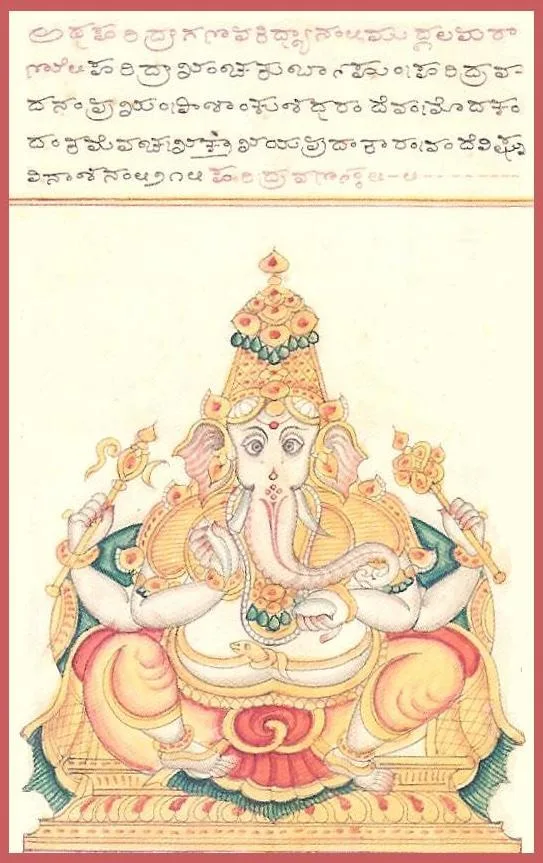 Painting: Folio from the Sritattvanidhi manuscript, Mysore, 19th century / Wikimedia Commons (Public domain)
Haridra means turmeric, and Haridra Ganapati is depicted entirely in its golden-yellow color — a form deeply woven into the customs surrounding marriage, health, and new beginnings in the household.
Appearance
With four arms, Haridra Ganapati holds his tusk, a goad, a noose, and a modak, his entire form radiant with the warm yellow of turmeric, the auspicious substance long used in Hindu ritual and daily life alike.
What the Form Represents
Turmeric holds a treasured place in household ritual — applied in ceremonies of marriage, purification, and healing alike. Haridra Ganapati carries this same association, representing wellbeing, auspiciousness, and the protective blessing sought at the outset of significant life events.
What Devotees Seek
Families preparing for a wedding, seeking blessings for fertility, or praying for good health turn to Haridra Ganapati for his particular association with these deeply personal milestones.